
Quiet first
POM or hybrid
For medical, optical, and smart home projects where tone and vibration are the earliest customer complaint.
Choose plastic, hybrid, or metal gear stages before a prototype fails the wrong test. Use this guide to align noise, torque, wear, lubrication, backlash, and sample validation with the real application risk.
Material choice is confirmed by RFQ and sample validation after drawings, load profile, acoustic target, life target, and volume forecast are reviewed.
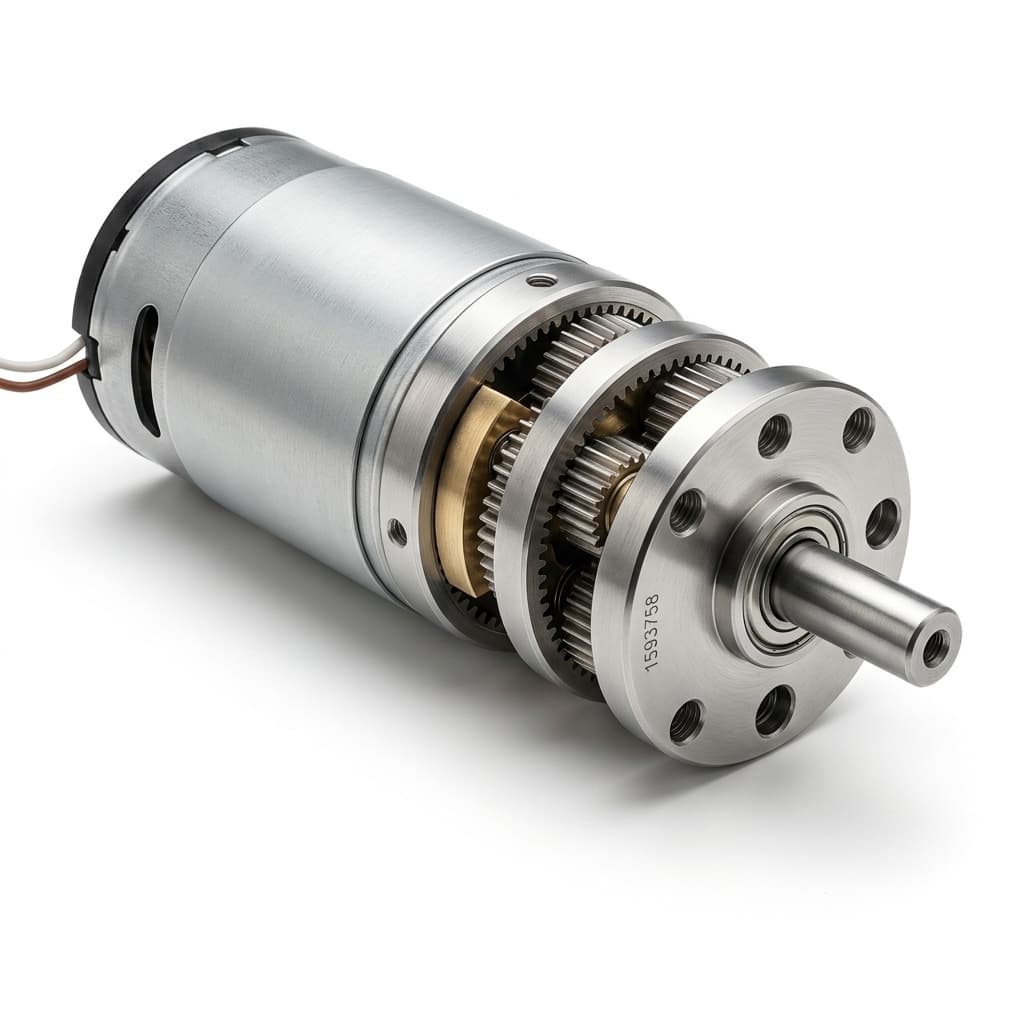
Quiet first
For medical, optical, and smart home projects where tone and vibration are the earliest customer complaint.
Torque first
For compact mechanisms with repeated stall, blocked output, high peak torque, or shock load.
Balanced path
For designs that need quiet motion but cannot accept a fully plastic torque train.
Decision Matrix
| Material Path | Best Fit | Strengths | Watchouts | RFQ Evidence |
|---|---|---|---|---|
| POM / acetal plastic gears | Low-noise medical devices, smart home products, optical trim, handheld instruments, and light-duty consumer mechanisms. | Quiet mesh, low mass, good wear behavior in small gears, and lower cost when torque and temperature are controlled. | Creep, heat rise, shock load, frequent stall, and aggressive lubricant or chemical exposure can move the design toward hybrid or metal stages. | Noise limit, duty cycle, loaded torque, stall event frequency, ambient temperature, expected life, and enclosure constraints. |
| Hybrid POM plus metal stages | Actuators that need a quiet first high-speed stage but stronger later torque stages, such as smart locks, valves, and compact robotics modules. | Balances acoustic performance, torque margin, gear life, and cost before moving every stage to metal. | Stage transition load, grease compatibility, gear carrier stiffness, and wear debris must be validated in sample testing. | Gear ratio, stage count, torque-speed curve, acoustic target, shock load, and sample acceptance criteria. |
| MIM / powder-metal gear stages | High-torque miniature gear motors, compact lock drives, rugged actuators, robotics auxiliaries, and mechanisms with repeat shock load. | Higher load capacity than plastic gears in the same envelope, better stall tolerance, and strong suitability for compact metal gear drives. | Noise, lubrication, dimensional class, cost, tooling, and backlash target need clear agreement before production freeze. | Peak torque, stall torque, radial or axial shaft load, noise limit, backlash limit, material class, and forecast quantity. |
| Machined steel, brass, or custom gears | Low-backlash prototypes, custom gearboxes, nonstandard pinions, extreme load cases, and programs where stock stages cannot pass validation. | Highest flexibility for tooth geometry, shaft interface, heat treatment, and precision class when custom engineering is justified. | Higher unit cost, longer lead time, drawing control, inspection burden, and MOQ risk should be justified by the application. | 2D gear drawing, material callout, tolerance class, hardness target, mating gear data, and inspection requirements. |
Selection Logic
Set the noise, torque, stall, temperature, backlash, current, and life targets that would fail the project.
Separate high-speed low-torque stages from low-speed high-torque stages so each material is judged where it actually works.
Choose POM, hybrid, MIM, or machined metal based on the dominant risk instead of repeating a catalog default.
Run loaded noise, current rise, backlash, wear, grease, stall, and accelerated life checks before committing the BOM.
Fast Triage
Start with POM or hybrid stages.
Define dB(A) limit, measurement distance, load condition, voltage, mounting state, and acceptance sample count.
Move toward hybrid, MIM, or metal gear stages.
Share continuous torque, peak torque, stall torque, current limit, duty cycle, and shock load cases.
Do not choose material alone. Review gear class, stage count, preload, bearing support, and assembly stack.
Provide backlash target, encoder resolution, load direction reversals, and final mechanism stiffness assumptions.
Validate a hybrid architecture before specifying all-metal stages.
Compare POM, hybrid, and metal samples under the same load, voltage, enclosure, and life-cycle test.
Visual Reference
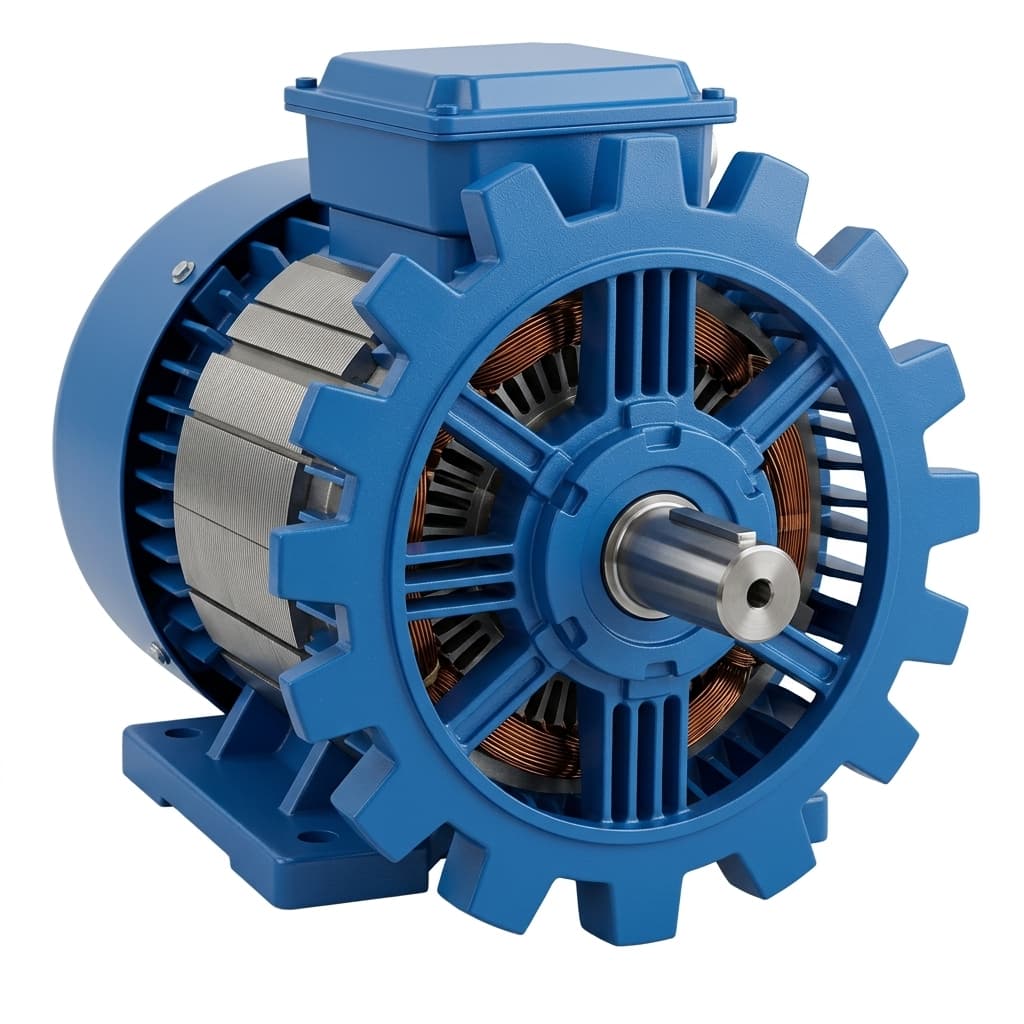
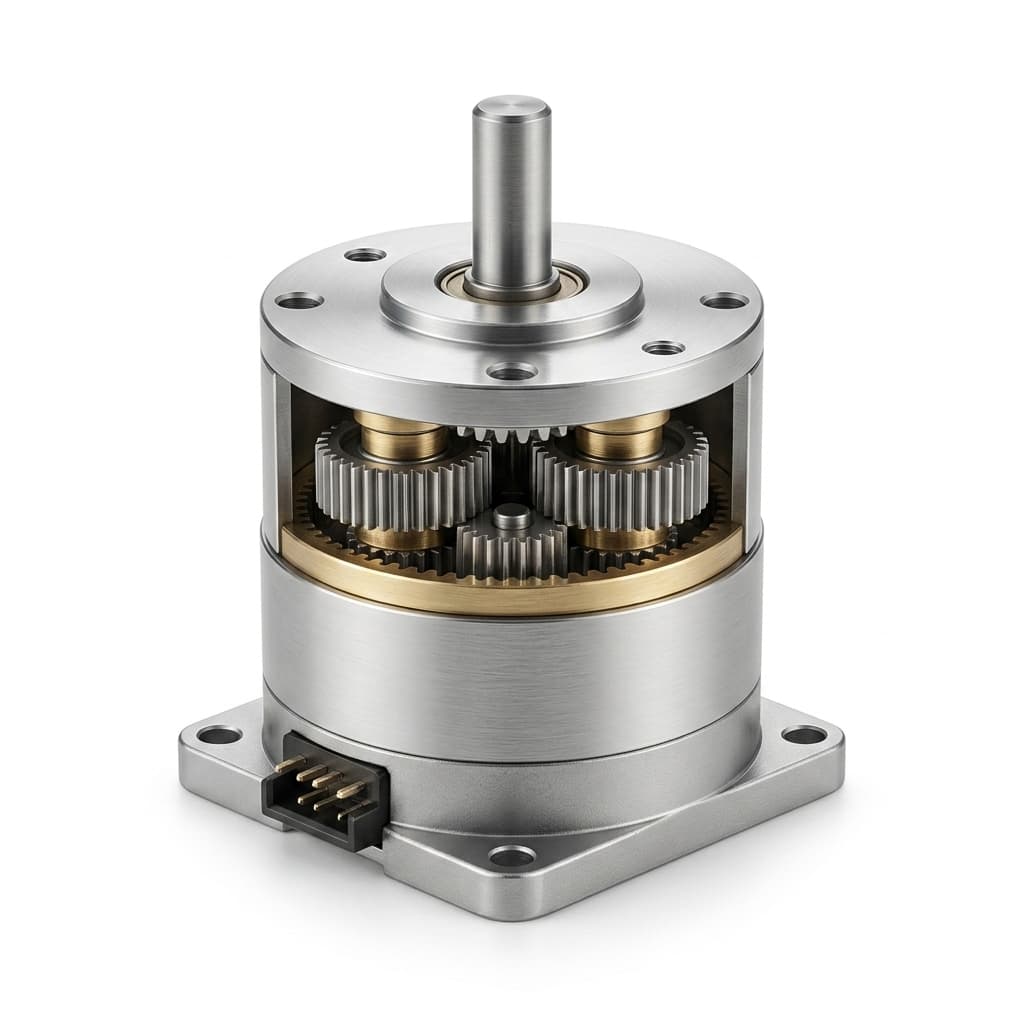
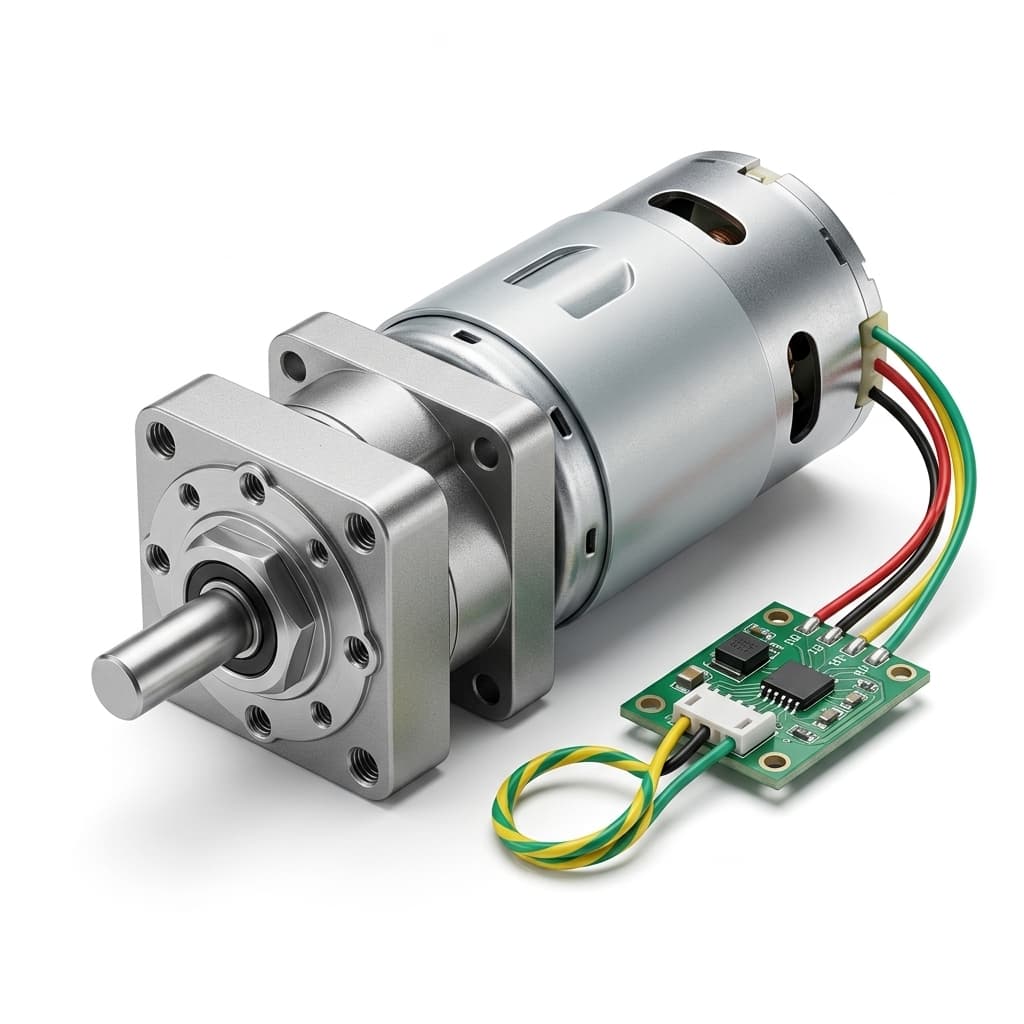
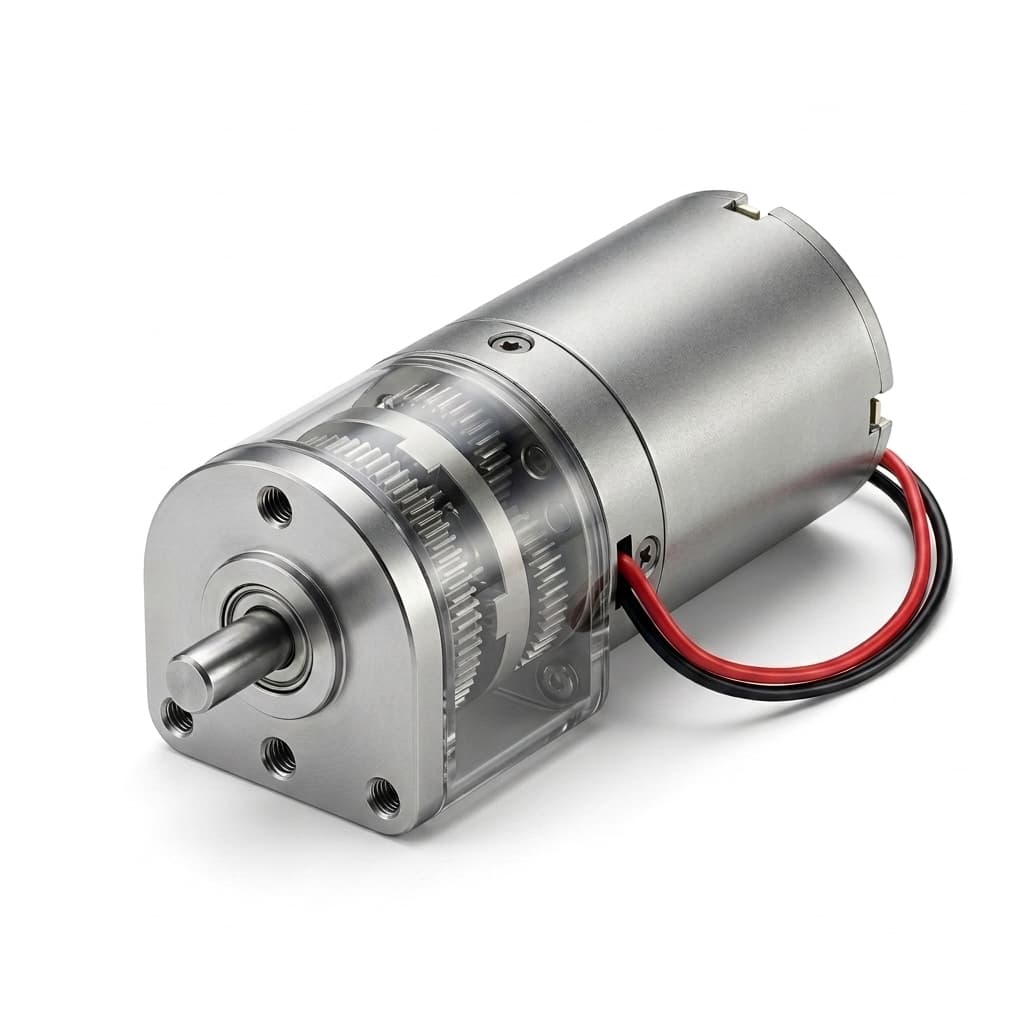
Use photos as a conversation starter only. Final material choice depends on stage count, ratio, load case, grease, shaft support, and the acceptance tests your buyer will use.
Sample Validation
| Validation Test | What to Watch | Why It Matters |
|---|---|---|
| Loaded acoustic test | Noise tone, dB(A), resonance, housing amplification | POM can be the right choice for quiet applications, but the full mounted assembly decides the result. |
| Torque and current rise | Continuous torque, peak torque, stall events, thermal rise | Material selection must protect both tooth strength and motor winding temperature. |
| Backlash and repeatability | Initial play, post-life play, reversal load, encoder behavior | Material does not guarantee precision unless gear class, assembly, and load direction are controlled. |
| Wear and grease inspection | Wear debris, grease migration, tooth polish, carrier wear | Hybrid and metal stages need lubricant review as much as torque review. |
| Accelerated life run | Duty cycle, ambient temperature, load profile, cycle count | A short bench pass can hide creep, heat, and lubricant issues that appear in the actual product cycle. |
RFQ Checklist
Applications
Prioritize POM or hybrid samples when acoustic comfort, low vibration, and clean feel matter more than peak stall strength.
Use hybrid review early because locks need quiet motion, but blocked-bolt events can punish a fully plastic gear train.
Favor MIM or metal stages when compact torque density, repeated starts, and shock load matter more than acoustic softness.
Validate stall margin and end-stop behavior before choosing plastic stages for high-ratio shutoff motion.
Check backlash, micro-vibration, and runout before assuming metal gears are automatically the better precision choice.
No. POM gears can be a strong fit for quiet, compact mechanisms when torque, duty cycle, heat, and stall events are controlled. They become risky when the application has frequent blocked output, high shock load, or elevated temperature.
Choose MIM or metal stages when torque density, shock load, stall tolerance, temperature, or compact durability is the dominant risk. Noise, grease, backlash, and cost still need validation because metal is not automatically better for every metric.
Often, yes. A hybrid path can keep the first high-speed stage quieter while using metal where torque rises in later stages. It needs sample validation because the transition between materials can become the wear or noise point.
No. Backlash depends on tooth geometry, gear class, stage count, carrier stiffness, bearing support, assembly control, and load direction. Material is one input, not the whole precision system.
Send size limits, torque-speed targets, duty cycle, life target, noise and backlash limits, stall or shock cases, shaft load, drawing status, prototype quantity, forecast volume, and the application failure mode you most need to avoid.
Inquiry Email
Include OD/length, voltage, torque, loaded speed, ratio, drawings, quantity, and destination.
Instant Chat
+86 18857971991
Fast channel for clarifying specs, drawings, and sample timing.